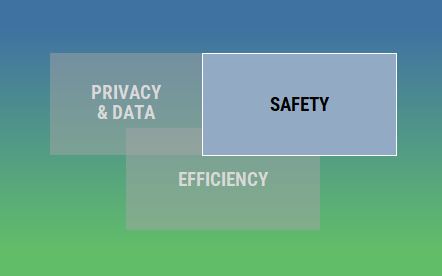
Safety: Conceptually Simple, Operationally Complex
The concept of safety across the ad industry is relatively straightforward: the ability for the buy-side and consumers to interact with advertising, media, and services in ways that do not cause harm to themselves or each other. This is also not a new issue.
Since advertising began, marketers have considered brand safety when deciding which publications were appropriate for placing their ads, and consumers have long considered the context in which they see an ad when evaluating its credibility. However, the complexity of advertising environments has increased exponentially over the past two decades. Despite a simple objective, the proliferation of devices, media channels, and content sources has led to immense operational challenges for industry and consumer ad safety.
Industry safety has broadened from concerns about a brand appearing next to unsavory content to encompass questions about whether a brand is getting the ad experience they’re paying for. Is the impression being delivered to a person or a bot? If the ad is not meant for a minor, is that being enforced? If location targeting was part of the buy, were all impressions delivered in-geo? And if a type of content was classified as unsuitable (a more subjective, brand-specific scenario), was the impression withheld? The sheer volume of content, combined with the introduction of programmatic marketplaces and advertising within user-generated content environments, has drastically changed the complexity of executing “industry-safe” campaigns.
On the consumer ad safety side, how advertising content is delivered to consumers has changed in dramatic and unexpected ways in the digital world. Not only are consumers constantly navigating personalized environments – which can change their perceptions of the content they are consuming – but the mechanisms deciding which ad content they see are no longer controlled by people and are sometimes disconnected from corresponding content algorithms and systems. These combined forces can create vicious circles where consumers are at risk from the biases inherent to the ad delivery systems, and those ads are normalized by the personalization that they experience in content throughout the digital ecosystem.
However, unlike other paradigm shifts in advertising, there is already a lot of progress and successful self-regulation within the industry and consumer ad safety spaces. The ad industry has created standards and products that address the operational complexities of today’s ad safety challenges. This has allowed brands the opportunity to be proactive:
-
Brands are going beyond business objectives to align media spend with their and consumers’ overarching values.
-
Brands and consumers (or their advocates) have united to demand transparent reporting from platforms about the overall safety of the content that is being exposed, allowing both parties to make choices about what platforms they want to support.
-
Verification products and audits have become part of the industry’s norms for operationalizing campaigns.
The biggest gaps remain in ensuring appropriate checks and balances on AI-delivered advertising; the issue is actively regulated for specific categories and audiences (e.g., housing and minors).
While all of this progress has provided paths forward in complex terrain, there are more nuanced areas that have not yet been addressed. The personalization of content has complicated suitability, with its definition varying from person to person and brand to brand and requiring meaningful tradeoffs in media buying. Further, introducing new content sources, from user-generated content to generative AI, means consumers’ expectations of ads within those environments are also evolving. Standards and rules will need to adapt and must be informed by consumer research to ensure that they address the safety objectives of the industry and consumers.
The alignment on the importance of industry and consumer ad safety has led to the additional challenge of a proliferation of solutions and strategies in the space. There are also high expectations on all sides, making it challenging for platforms and marketers that are just starting to consider brand safety and suitability.
There are several strategies to be considered:
-
Media spend safety audit
-
Brand safety reporting tools and brand suitability pre-bid buying options
-
Community guideline alignment with GARM standards
-
3rd-party safety audits and verification tools
-
AI audits
-
Human content review and algorithmic interventions
-
New format restrictions
-
User cohort safety precautions
While the list of strategies can appear long, understanding where you are relative to your industry and consumer ad safety goals and where you can get the most impact will help to prioritize and create a meaningful path forward.
All of these solutions and challenges are examples of how, despite the simplistic objective of safety within advertising for the industry and consumers, and the progress that has been made, the evolution of existing solutions and the introduction of new technologies will need to continue to keep safety top of mind to support a sustainable advertising ecosystem. This is why Safety is a key pillar for ThinkMedium.